Tai Chi Chair Yoga — Gentle Seated Flow for Stiff Joints and Calm
Tai chi and chair yoga are often mentioned together, and for good reason. Both are slow, low-impact, and breath-led. Both can be done entirely from a sturdy chair. They differ in emphasis, and a short session that blends them gives you the best of each.
This guide explains the difference, then gives you a 12-minute tai chi chair yoga flow you can follow today. No mat, no equipment, and no standing required.
Tai Chi vs. Chair Yoga: What Is the Difference?
| Chair yoga | Chair tai chi | |
|---|---|---|
| Main focus | Holding gentle stretches and poses | Continuous, flowing movement |
| Pace | Move, hold, breathe, release | Never stops; one move melts into the next |
| Strong point | Flexibility, spine and hip mobility | Balance, coordination, weight shifting, calm focus |
| Breath | Deep, paced with each pose | Slow and natural, matched to the arms |
In short, yoga opens the body and tai chi connects it. If your back, hips, or shoulders feel stiff, start with the yoga half of the flow. If you want steadier balance and a quieter mind, spend longer on the tai chi half. Most people do best with both, which is why the routine below uses both.
Before You Start
- Chair: sturdy, no wheels, no swivel, with a firm seat. A dining chair is ideal.
- Seat position: sit toward the front half of the seat, feet flat and hip-width apart, knees roughly over ankles.
- Clothing: anything that lets your shoulders and hips move freely. Shoes or bare feet are both fine, as long as your feet don't slide.
- Pace: if you are not sure how slow, go slower. About half the speed that feels natural is about right.
- Pain rule: gentle stretch and warmth are fine. Sharp, pinching, or joint pain means ease off or skip that move.
The 12-Minute Tai Chi Chair Yoga Flow
1. Arrive and Breathe (1 minute)
Rest your hands on your thighs. Soften your shoulders. Breathe in through your nose for a count of 4 and out for a count of 6. Repeat 5 times. Let each exhale drop your shoulders a little further from your ears.
2. Seated Cat-Cow (1½ minutes)

Place your hands on your knees. Breathe in: lift your chest, gently arch your lower back, and look slightly up. Breathe out: round your back, tuck your chin, and let your shoulders curl forward. Do 6 slow rounds. Keep the movement small if your neck or lower back feels tender.
3. Seated Spinal Twist (1½ minutes)
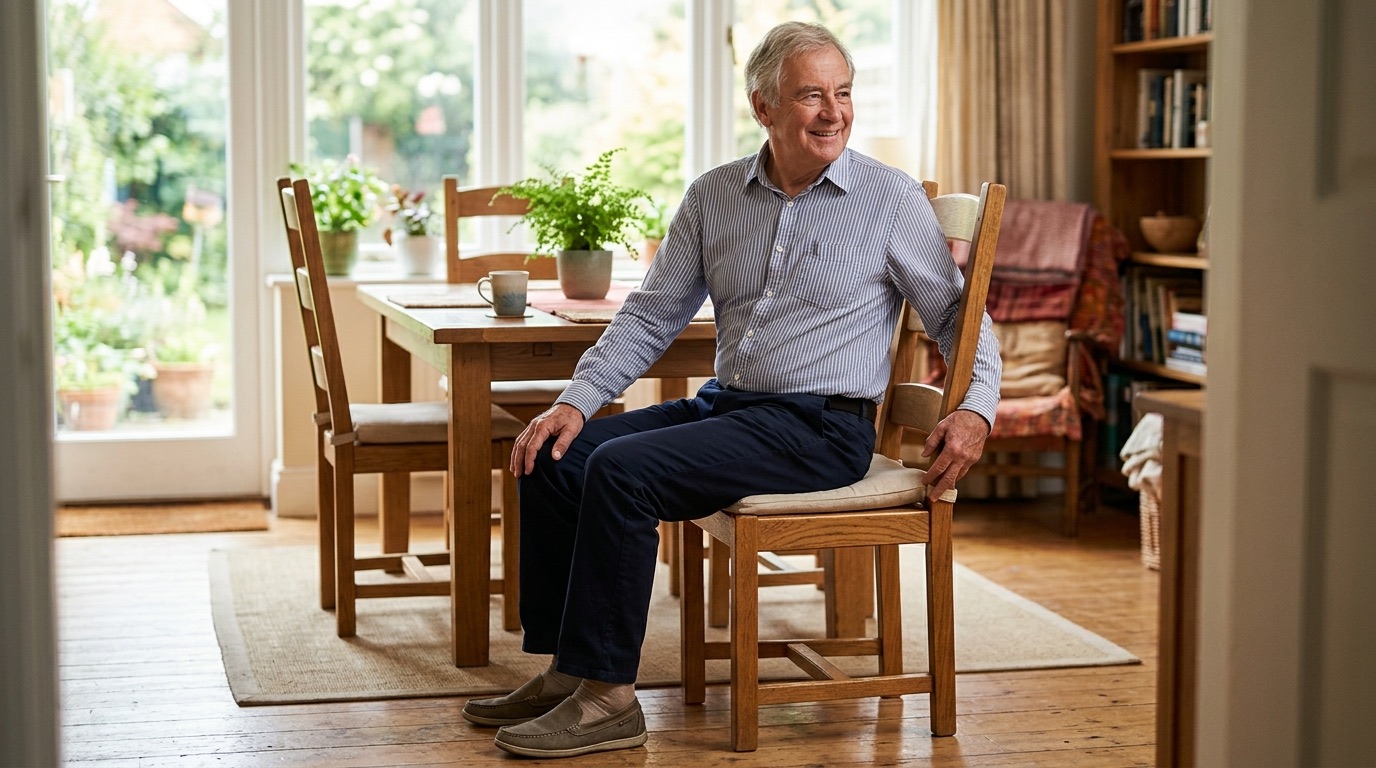
Sit tall. Breathe in and lengthen your spine. Breathe out and turn to the right, placing your left hand on your right knee and your right hand on the chair back or seat edge. Look over your shoulder only as far as is comfortable. Hold for 3 breaths, return to center, then repeat to the left. Never force the twist. Lead with your chest, not your chin.
4. Shoulder Rolls and Neck Release (1 minute)
Roll your shoulders back 5 times, then forward 5 times. Then tilt your right ear toward your right shoulder, hold for 2 breaths, and switch sides. Keep the opposite shoulder relaxed.
5. Seated Hip Opener (1½ minutes)
Place your right ankle on your left knee, as for crossing your legs. Keep your back long and, if you feel a gentle stretch outside the hip, stay for 4 breaths. Switch sides. If crossing the ankle isn't comfortable, simply lift your knee slightly and lower it 8 times each side. This is a perfectly good alternative.
6. Tai Chi Opening: Rising Palms (1½ minutes)
Now the tai chi half begins. Let your hands hang by your sides, palms facing up. Breathe in as your palms float up to chest height like they are resting on water. Breathe out as your palms turn down and settle back to your thighs. Repeat 8 times. Move so slowly that your hands never quite stop.
7. Cloud Hands (2 minutes)

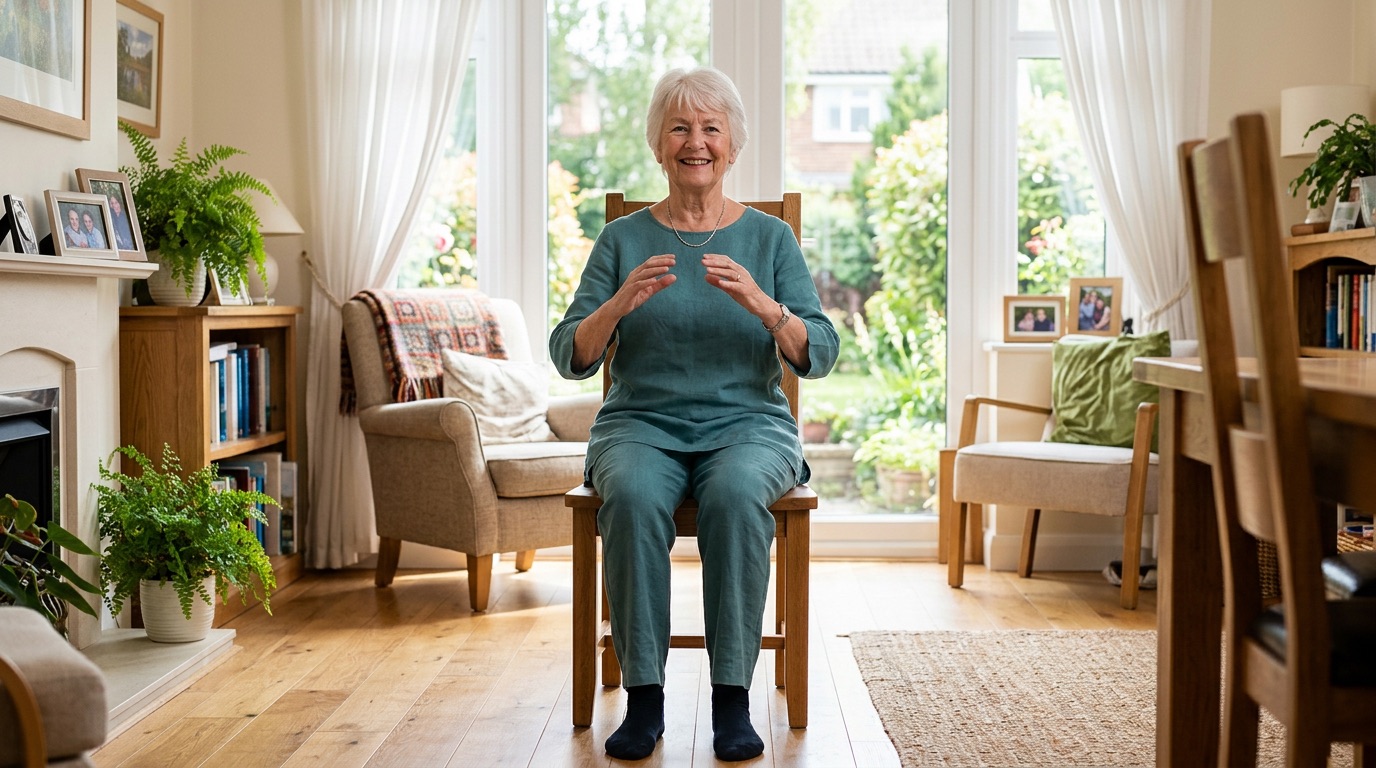
Hold one hand at chest height (palm facing you) and the other near your belly (palm facing down), as though holding a large ball. Turn your torso gently to the right while your hands trade places, then reverse to the left. Your feet stay planted. Let your waist do the turning, and keep your eyes following the upper hand. Do 10 slow turns in total. For a gentler version, shrink the movement and skip the torso turn.
8. Closing: Settle and Gather (1 minute)
Sweep both arms wide as you breathe in, then circle them down as you breathe out until your palms rest on your belly. Stay for 5 quiet breaths. Notice how your shoulders, back, and breath feel compared with a few minutes ago.
Which Version Is Right for You?
- Stiff and sore: do steps 1 to 5 twice, and keep the tai chi arms small.
- Balance and focus: do steps 1, 6, 7 and 8 twice. Slow, weight-aware movement is where tai chi helps most.
- Short on time: the 5-minute chair tai chi routine covers the essentials. Ready for more? Try the 15-minute routine.
- Arthritis: keep all movement within a pain-free range. See our guide to chair tai chi for arthritis.
How Often Should You Practice?
Short and regular beats long and rare. Aim for 10 to 15 minutes, 3 to 5 days a week, ideally at a similar time each day. After about 3 to 4 weeks most people find the movements feel familiar enough to stop thinking about the sequence. This is when the calm starts to build.
Safety Notes
Chair practice is gentle, but it is still exercise. Check with your doctor or physical therapist before starting if you have a recent surgery, severe osteoporosis, uncontrolled blood pressure, dizziness, or balance problems. Stop and rest if you feel lightheaded. This article is general information, not medical advice.
Follow Along With Video
Reading a routine is one thing; following a calm voice and a moving teacher is much easier. Our Seated Tai Chi Video Course was built exactly for that.
- 10 short guided steps, about 11 minutes in total, all from a chair
- Spoken steps shown on screen, so you never have to guess what comes next
- A full flow with calm music once you know the moves
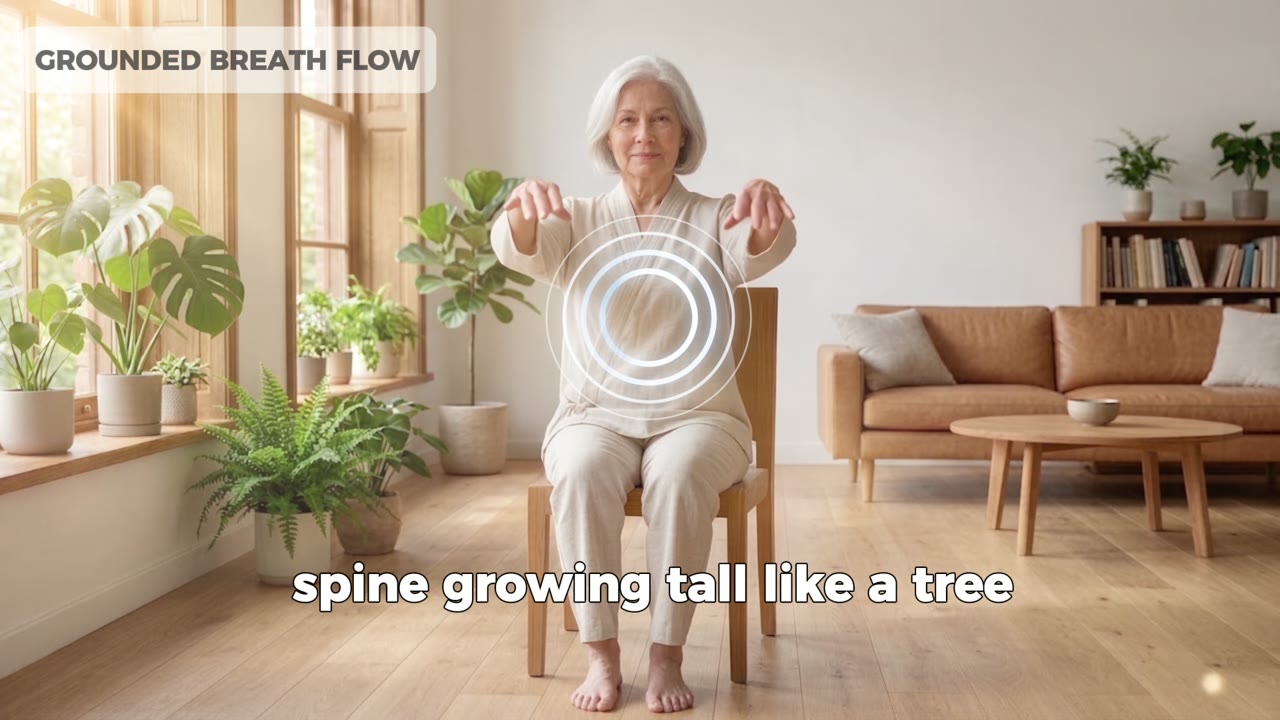
- The first four steps are free (chair setup, settling your breath, Grounded Breath Flow, Palm Turn Sequence), with no email or sign-up
- $19.90 one-time for all 10 steps, no subscription, and a 30-day money-back guarantee
- The on-screen teacher is AI-animated
Watch the four free steps or unlock the full course for $19.90.
Prefer Paper? Get the Printable Pack
If you like to keep a routine on the fridge or hand it out to a class, the Chair Tai Chi Printable Pack is a one-time $9.90 download:
- Eight print-ready files in one ZIP: separate men's and women's workout sheets
- Each version in A4 PDF, US Letter PDF, A4 JPG and US Letter JPG
- No login needed, and you can download again later with your email
- Suitable for home, caregivers, senior centers, and small classes
See the Printable Pack or start with our free printable guide for seniors.
Frequently Asked Questions
Is tai chi chair yoga good for seniors? Yes. Both are low-impact and can be adjusted to almost any ability. Start with small movements and increase gradually.
Can I do it if I have never done yoga or tai chi? Absolutely. Every move above is a beginner move. The video course's free preview is a good way to see the pace before committing.
How slow is too slow? There isn't one. If you feel any strain, slow down further and make the movement smaller.