Seated Tai Chi — The Complete Guide
Seated tai chi brings the ancient wisdom of tai chi to your chair. This comprehensive guide covers everything about seated tai chi — from its origins and philosophy to practical exercises you can start today.
Learn how seated tai chi can transform your health and well-being.

Understanding Seated Tai Chi
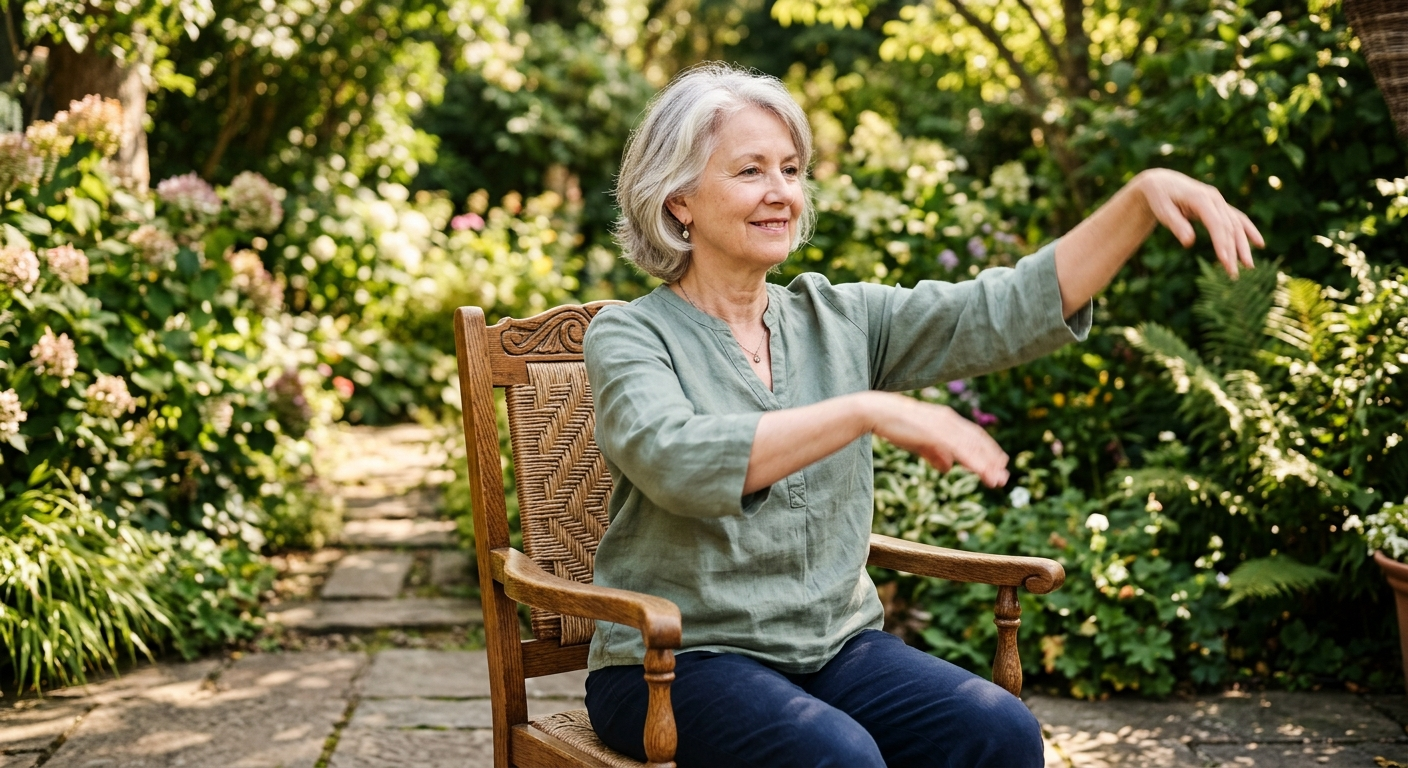
Seated tai chi is a thoughtful adaptation of traditional tai chi chuan that allows practitioners to experience the full benefits of this ancient Chinese art while remaining comfortably seated. Unlike a simplified version of tai chi, seated tai chi preserves the core principles of traditional practice — including qi flow, yin-yang balance, and mindful movement — while removing the balance and standing requirements that can be barriers for some people. Seated tai chi has been practiced in rehabilitation centers, hospitals, and senior communities worldwide for over two decades, with growing scientific evidence supporting its effectiveness.
The Philosophy Behind Seated Tai Chi
Seated tai chi is rooted in the same Taoist philosophy as traditional tai chi. The fundamental principle is that health comes from the harmonious flow of qi (life energy) through the body. Seated tai chi movements are designed to promote this flow through gentle, circular motions coordinated with breathing. Even while seated, practitioners of seated tai chi can cultivate the same internal awareness and energy cultivation that standing practitioners experience.
How Seated Tai Chi Differs from Standing Tai Chi
The primary difference in seated tai chi is the elimination of stepping and weight-bearing lower body movements. In seated tai chi, upper body movements — arm circles, torso rotations, and hand techniques — remain nearly identical to standing forms. Lower body involvement is adapted through seated weight shifts, ankle exercises, and leg extensions. Seated tai chi also places greater emphasis on breath work and upper body flexibility compared to the stepping-focused standing forms.
Who Benefits from Seated Tai Chi?
Seated tai chi serves a remarkably diverse population. Seniors who face balance challenges or fall risks find seated tai chi invaluable. Wheelchair users practice seated tai chi to maintain upper body mobility and mental wellness. Office workers use seated tai chi for stress relief during breaks. Stroke survivors use seated tai chi as rehabilitation therapy. People with chronic pain conditions practice seated tai chi for gentle, non-pharmacological pain management.
Evidence-Based Results of Seated Tai Chi
Clinical research consistently validates the benefits of seated tai chi. A 2022 study in Stroke (Zhao et al., n=160) found that 12 weeks of seated tai chi matched conventional rehabilitation for stroke survivors, improving arm function and reducing depression. A 2021 systematic review in the International Journal of Nursing Studies confirmed sitting tai chi improves both physical and psychosocial outcomes. The Arthritis Foundation and American College of Rheumatology both 'strongly recommend' tai chi for osteoarthritis. The CDC's STEADI initiative includes tai chi as an evidence-based fall prevention program.
Core Principles of Seated Tai Chi Practice
Understanding these core principles will deepen your seated tai chi practice and help you achieve maximum benefits from every session.
Getting Started with Seated Tai Chi
Follow these steps to establish a meaningful seated tai chi practice that will serve you for years to come.
Prepare Your Practice Space
Choose a quiet, well-lit area for your seated tai chi practice. Place your chair on a flat, non-slip surface. Ensure you have enough room to extend your arms fully in all directions. Some seated tai chi practitioners enjoy practicing near a window with natural light, or in a garden when weather permits.
Master the Seated Tai Chi Posture
Sit on the front third of your chair with feet flat, hip-width apart. Align your spine naturally — avoid rigidity or slouching. Tuck your chin slightly to lengthen the back of your neck. Let your shoulders relax and your arms hang loosely. This seated tai chi posture should feel comfortable enough to maintain for 20-30 minutes.
Learn the Three Foundations
Begin your seated tai chi journey by mastering three fundamentals: diaphragmatic breathing (breathe into your belly, not your chest), waist rotation (turn from your core, not your shoulders), and arm coordination (let your arms follow your waist, moving like floating clouds). These three skills form the foundation of every seated tai chi movement.
Build a Progressive Seated Tai Chi Routine
Week 1: Practice breathing and Opening/Closing forms (5 minutes daily). Week 2: Add Cloud Hands (10 minutes). Week 3: Add Parting Wild Horse's Mane (15 minutes). Week 4: Add remaining seated tai chi exercises for a complete 20-minute routine. This gradual approach ensures proper technique and prevents overwhelm.
Explore More Seated Tai Chi Resources
Deepen your seated tai chi practice with these free resources.
Seated Tai Chi FAQ
Common questions about seated tai chi practice and philosophy.
Start Your Seated Tai Chi Practice Today
All exercises, guides, and resources are completely free. No signup required.