Chair Tai Chi for Parkinson's Disease — Exercises & Evidence
Chair tai chi for Parkinson's offers a safe, evidence-backed way for people living with Parkinson's disease to improve balance, reduce falls, and maintain quality of life — all from the security of a seated position. As research continues to confirm the benefits of tai chi for neurological conditions, chair-based adaptations are making this ancient practice accessible to those who need it most.
Parkinson's disease affects more than one million Americans, with balance impairment and falls among the most serious daily challenges. Falls are a leading cause of hospitalization and loss of independence for people with Parkinson's, making effective fall-prevention exercise not just beneficial but essential.
This guide covers the clinical evidence behind tai chi for Parkinson's, explains why the seated form is particularly well-suited for this population, and provides five recommended chair tai chi exercises you can begin practicing today.
What Research Shows About Tai Chi and Parkinson's Disease
The evidence supporting tai chi for Parkinson's disease has grown considerably over the past decade. Multiple clinical studies and meta-analyses demonstrate meaningful improvements in the symptoms that matter most to people living with Parkinson's.
Fall Reduction
A landmark 2018 study published in JAMA Internal Medicine by Li et al. examined 670 older adults at risk of falling and found that tai chi reduced falls by 58% compared to stretching exercises. While this study was conducted with a general fall-risk population, its findings are directly relevant because people with Parkinson's face significantly elevated fall risk due to postural instability, freezing of gait, and impaired balance reflexes.
Balance and Mobility
Multiple studies have measured the effects of tai chi on balance and mobility using standardized tools. Research consistently shows that tai chi improves scores on the Berg Balance Scale and reduces completion times on the Timed Up and Go test — both directly relevant to fall risk and functional independence in Parkinson's disease.
Motor Function
A 2019 meta-analysis examined the effects of tai chi on motor function in Parkinson's patients using the Unified Parkinson's Disease Rating Scale (UPDRS). The analysis found that tai chi significantly improved motor function scores, suggesting that regular practice can help maintain movement quality and reduce motor symptom progression.
Seated Tai Chi Specifically
Research by Tsang et al., published in Complementary Medicine Research in 2025, examined seated tai chi specifically for people with Parkinson's disease. This study adds to the growing body of evidence that chair-based adaptations of tai chi can deliver meaningful therapeutic benefits for this population, supporting the use of seated practice when standing forms present safety concerns.
Recognition by Major Health Organizations
The NIH's National Center for Complementary and Integrative Health (NCCIH) notes that tai chi may benefit Parkinson's symptoms including balance, mobility, and quality of life. Harvard Health has highlighted tai chi's benefits for Parkinson's, citing its ability to improve balance and reduce the fear of falling. The Parkinson's Foundation acknowledges tai chi as a recommended exercise, recognizing its unique combination of physical movement, balance training, and mindfulness.
Why Chair Tai Chi Is Ideal for Parkinson's Disease
While standing tai chi is beneficial, chair tai chi offers specific advantages for people with Parkinson's disease that make it a particularly practical choice.
Safety During Balance Challenges
Parkinson's disease causes progressive postural instability, and many patients experience sudden episodes of freezing or loss of balance. Practicing tai chi from a chair eliminates the risk of falling during exercise, which is especially important for those in the moderate to advanced stages of the disease. The chair provides continuous support, allowing practitioners to focus on the therapeutic movements rather than worrying about stability.
Accessible During "Off" Periods
People with Parkinson's who take levodopa and other dopaminergic medications often experience fluctuations in their motor function throughout the day. During "off" periods — when medication effects have worn off — standing exercise may be difficult or unsafe. Chair tai chi can be practiced even during these more challenging times, ensuring that exercise remains consistent regardless of medication cycles.
Reduced Fatigue
Fatigue is one of the most common non-motor symptoms of Parkinson's disease. Seated practice requires less overall energy expenditure than standing forms, allowing people to practice for longer periods and gain more benefit from each session without becoming exhausted.
Suitable for Wheelchair Users
For those who use wheelchairs part-time or full-time, chair tai chi can be performed directly from the wheelchair, making it one of the most inclusive forms of exercise available for the Parkinson's community.
5 Recommended Chair Tai Chi Exercises for Parkinson's
The following exercises are adapted from traditional tai chi forms and are particularly beneficial for the symptoms of Parkinson's disease. Perform each movement slowly and smoothly, coordinating your breath with your motion.
1. Cloud Hands (Yún Shǒu 云手)
Cloud Hands is one of the most recognizable tai chi movements and is excellent for Parkinson's patients because it promotes coordination, trunk rotation, and bilateral arm movement.
How to practice: Sit upright with feet flat on the floor. Begin with both hands in front of your chest. Slowly rotate your torso to the left as your left hand rises to face level and your right hand drops to waist height. Then rotate to the right, reversing the hand positions.
Why it helps: This exercise encourages trunk rotation, which becomes restricted in Parkinson's disease. It also trains bilateral coordination, helping counteract the asymmetric motor symptoms common in Parkinson's.
2. Weight Shifting
Weight shifting is a foundational balance training exercise that builds proprioception — your body's awareness of its position in space.
How to practice: Sit upright and place your hands gently on your thighs. Slowly shift your weight to the left, feeling the pressure increase on your left sitting bone. Pause for a breath, then slowly shift to the right. Keep your upper body tall and your movements controlled. As you become more comfortable, you can add a gentle arm lift on the side you are shifting toward.
Why it helps: Proprioception is often impaired in Parkinson's disease, contributing to balance problems and falls. Seated weight shifting trains the body to detect and respond to subtle weight changes, building the neural pathways that support better balance during daily activities.
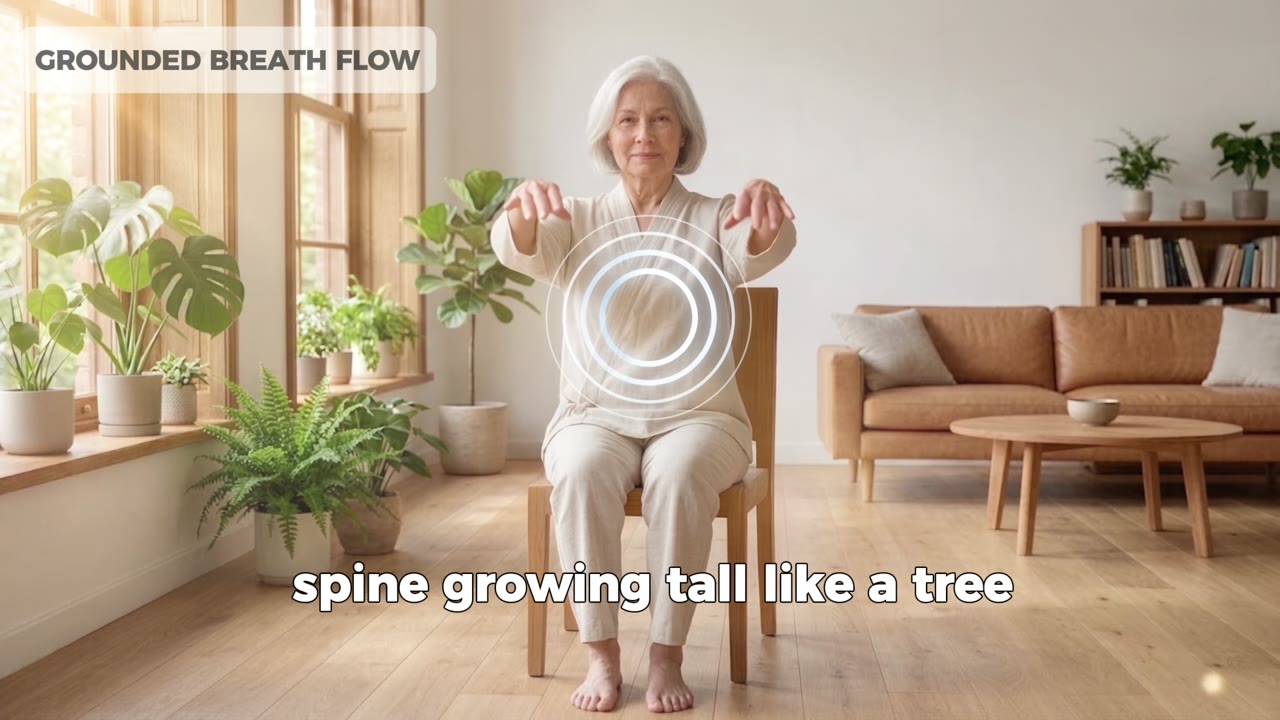
3. Arm Raises with Breathing
This exercise combines gentle arm movement with deep breathing to improve posture, expand lung capacity, and activate the diaphragm.
How to practice: Sit tall with your hands resting on your thighs, palms down. As you inhale slowly through your nose, raise both arms forward and upward until they reach shoulder height, palms facing down. Pause briefly at the top. As you exhale slowly through your mouth, lower your arms back to your thighs. Repeat for eight to ten breaths.
Why it helps: Parkinson's disease often causes a stooped posture and reduced chest expansion. This exercise gently opens the chest, strengthens the muscles of upright posture, and encourages deep, diaphragmatic breathing that supports respiratory health.
4. Seated Marching
Seated marching builds leg strength and hip flexor engagement while training the alternating coordination pattern used in walking.
How to practice: Sit upright with your feet flat on the floor. Slowly lift your right knee upward, bringing your foot a few inches off the ground. Hold briefly, then lower it back down. Repeat with the left knee. Continue alternating legs in a slow, controlled marching rhythm. You can add opposite arm movements — lifting your left arm as your right knee rises — to increase the coordination challenge.
Why it helps: Walking difficulties are a hallmark of Parkinson's disease. Seated marching mimics the alternating leg pattern of gait in a safe, supported position, helping maintain hip flexor strength and encouraging reciprocal coordination that may reduce freezing of gait.
5. Closing Form (Shōu Shì 收势)
The Closing Form is a traditional tai chi finishing sequence that calms the nervous system and promotes deep relaxation.
How to practice: Sit comfortably with your eyes gently closed. Place your hands on your lower abdomen, one on top of the other. Breathe slowly and deeply, feeling your abdomen rise and fall. With each exhale, release tension from your shoulders, jaw, and hands. Continue for one to two minutes.
Why it helps: Stress and anxiety can worsen Parkinson's tremor and other motor symptoms. The Closing Form activates the parasympathetic nervous system, promoting a state of calm that can temporarily reduce tremor severity. Ending each session with this form creates a positive association with the exercise, encouraging continued participation.
Practice Tips for Parkinson's Patients
To get the most from your chair tai chi practice, keep these Parkinson's-specific guidelines in mind:
-
Practice during "on" medication periods. Schedule your tai chi sessions for times when your medication is at peak effectiveness. You will move more freely, learn more effectively, and enjoy the practice more when your motor function is at its best.
-
Use a sturdy chair with a back. Choose a solid chair that will not slide or tip. A chair with a supportive back provides additional security if you need to lean back and rest between exercises. Avoid chairs with wheels or deep, soft cushions.
-
Have a caregiver or partner nearby. If your balance is severely affected, have someone nearby during your first several sessions. They do not need to participate — simply being present provides a safety net and reassurance.
-
Start with 5 to 10 minutes. Begin with short sessions and gradually increase duration. Consistency matters more than session length — 10 minutes every day is more beneficial than 60 minutes once a week.
-
Focus on smoothness, not speed. The therapeutic value of tai chi comes from slow, continuous movement. If a movement feels rushed or jerky, slow down further. There is no minimum speed in tai chi.
-
Keep a practice journal. Tracking your sessions can help you and your neurologist identify which times of day work best and how your symptoms respond to regular practice over time.
Recommended Video Resources
These free YouTube videos offer excellent guided chair tai chi sessions suitable for people with Parkinson's disease:
Chair Exercises for Parkinson's — TaiChiHealthProducts
A focused seated tai chi routine designed specifically for people with Parkinson's disease, with clear instruction and appropriate pacing. Watch on YouTube — 137K+ views
Seated Tai Chi with David-Dorian Ross
A popular and comprehensive seated tai chi session led by one of the most recognized tai chi instructors in the United States. Excellent for both beginners and experienced practitioners. Watch on YouTube — 606K+ views
Seated Tai Chi in 6 Minutes — WA Centre
A short, gentle seated tai chi routine that is ideal for days when energy is low or time is limited. A great option during "off" periods or as a daily minimum practice. Watch on YouTube — 197K+ views
For more video recommendations, visit our complete guide to chair tai chi on YouTube.
Continue Your Practice
Chair tai chi for Parkinson's is most effective as a regular part of your daily routine. Explore these resources to deepen your practice:
- Chair Tai Chi Exercises — Step-by-step instructions for all fundamental seated tai chi movements
- Chair Tai Chi for Seniors — A comprehensive guide to seated tai chi for older adults, including those managing chronic conditions
- Tai Chi for Fall Prevention — The evidence behind tai chi as one of the most effective fall-prevention exercises available
- Chair Tai Chi YouTube Guide — Curated list of the best free video resources for seated tai chi practice
Medical Disclaimer
This article is for informational purposes only and does not constitute medical advice. Parkinson's disease is a complex neurological condition that requires professional medical management.
Before beginning any exercise program, including chair tai chi, consult your neurologist or movement disorder specialist. They can advise on which exercises are appropriate for your current stage, how to coordinate exercise with your medication schedule, and whether any movements should be modified.
Always practice during your "on" medication periods when possible, use a sturdy chair with a back, and have a caregiver or support person nearby if your balance is significantly affected. If you experience dizziness, pain, or unusual symptoms during practice, stop immediately and consult your healthcare provider.
Chair tai chi is a complement to — not a replacement for — your prescribed Parkinson's treatment plan.