Tai Chi for Fall Prevention — What the Research Actually Shows
Falls are not a normal part of aging, and they are not inevitable. Over the past two decades, a growing body of clinical research has identified tai chi for fall prevention as one of the most effective exercise interventions available to older adults. Major health organizations — including the CDC, the National Council on Aging (NCOA), and the U.S. Department of Veterans Affairs — now recommend tai chi-based programs specifically for reducing fall risk.
This article breaks down the evidence, explains why tai chi works, and gives you practical exercises you can start today — including seated modifications for those with limited mobility.
Why Falls Matter
Falls are the leading cause of injury-related death among adults aged 65 and older, according to the Centers for Disease Control and Prevention (CDC). The numbers are sobering:
- About 1 in 4 adults aged 65 and older falls each year in the United States (CDC).
- Falls result in over 3 million emergency department visits annually among older adults.
- Hip fractures, traumatic brain injuries, and long-bone fractures are among the most common serious outcomes.
- Even falls that do not cause physical injury often trigger a fear of falling, which leads people to restrict their activity — creating a downward cycle of deconditioning, weakness, and increased fall risk.
The CDC's STEADI initiative (Stopping Elderly Accidents, Deaths & Injuries) was developed to help healthcare providers screen for and address fall risk. Tai chi is one of the exercise interventions specifically included in STEADI's recommended resources.
What the Research Says
Tai chi for fall prevention is not folk wisdom — it is backed by rigorous, peer-reviewed clinical trials. Here are the key studies you should know about.
The JAMA 2018 Landmark Trial
The most frequently cited study on tai chi for fall prevention was published in JAMA Internal Medicine in 2018 by Li et al. This randomized controlled trial enrolled 670 older adults with a history of falls or fall risk factors and compared three interventions over six months:
- Tai Ji Quan: Moving for Better Balance (a structured tai chi program)
- Multimodal exercise (combining balance, aerobic, strength, and flexibility training)
- Stretching (control group)
The results were striking:
- Tai chi reduced the incidence of falls by 58% compared to the stretching group.
- Tai chi reduced falls by 31% compared to the multimodal exercise group.
- Participants in the tai chi group also showed significantly greater improvements in functional balance.
This study is important because the comparison group was not inactive — it was a well-designed, comprehensive exercise program. Tai chi still outperformed it.
Li F, Harmer P, Fitzgerald K, et al. Effectiveness of a Therapeutic Tai Ji Quan Intervention vs a Multimodal Exercise Intervention to Prevent Falls Among Older Adults at High Risk of Falling: A Randomized Clinical Trial. JAMA Internal Medicine. 2018;178(10):1301–1310.
2019 Cochrane-Style Systematic Review
A comprehensive 2019 review pooling data across multiple randomized controlled trials found that tai chi:
- Reduced the rate of falls by 19% across pooled studies.
- Reduced the number of people experiencing one or more falls by 20%.
These are conservative, pooled estimates across studies with varying populations and program designs. In studies with higher-risk populations and longer program durations, the effect sizes were larger — consistent with the JAMA 2018 findings.
U.S. Department of Veterans Affairs (2025)
The VA's evidence synthesis rated the evidence supporting tai chi for fall prevention as "high certainty." This is the highest confidence rating in their assessment framework and reflects the consistency and quality of the available research. The VA now recommends tai chi as part of fall prevention programming for veterans.
How Tai Chi Prevents Falls
Tai chi does not prevent falls through a single mechanism. Instead, it addresses multiple fall risk factors simultaneously — which is likely why it outperforms single-focus interventions.
Proprioception
Proprioception is your body's ability to sense its position in space. Tai chi's slow, deliberate weight-shifting movements train the sensory receptors in your feet, ankles, and legs to detect small changes in balance. Over time, your body becomes faster and more accurate at making the micro-adjustments that keep you upright.
Core and Lower-Body Strength
Every tai chi movement originates from the core and is expressed through the legs. Standing postures build isometric strength in the quadriceps, glutes, and deep stabilizing muscles of the trunk. Even seated tai chi engages the core through rotational movements and controlled weight shifts.
Weight Transfer Skills
Walking is controlled falling — you shift your weight from one foot to the other with every step. Tai chi trains precisely this skill, teaching you to transfer weight smoothly, maintain your center of gravity, and recover when your balance is challenged.
Reaction Time
Research shows that tai chi practitioners develop faster postural reactions — meaning they catch themselves more quickly when they start to lose balance. This is partly a physical adaptation and partly a neurological one.
Confidence and Fear Reduction
Fear of falling is itself a major risk factor for falls, because it leads to stiffness, tentative movement, and avoidance of activity. Tai chi builds genuine confidence through repeated, safe practice of balance challenges. Participants in fall prevention studies consistently report reduced fear of falling alongside their physical improvements.
CDC and NCOA Endorsed Programs
Not all tai chi programs are created equal. The following three programs have been formally recognized by the National Council on Aging (NCOA) as evidence-based fall prevention programs. If you are looking for a structured class, these are your best bets.
1. Tai Chi for Arthritis and Fall Prevention
- Developer: Dr. Paul Lam (Tai Chi for Health Institute)
- Format: 8 weeks, 2 sessions per week — or 16 weeks at 1 session per week
- Details: Based on Sun-style tai chi, which uses a smaller stance and higher posture than other styles. Originally designed for people with arthritis, it was later validated for fall prevention and is now one of the most widely offered programs in senior centers, YMCAs, and community health settings worldwide.
2. Tai Ji Quan: Moving for Better Balance®
- Developer: Oregon Research Institute (Li et al.)
- Format: 24 weeks, 2 sessions per week, 1 hour per session
- Details: This is the program used in the JAMA 2018 study. It consists of an 8-form tai chi routine that is progressively adapted over six months to increase balance challenge. It is the most rigorously studied tai chi fall prevention program in the research literature.
3. Tai Chi Prime
- Format: 6 weeks
- Details: A shorter introductory program designed as an entry point for older adults who may not be ready for a longer commitment. It provides a taste of tai chi principles and basic balance exercises.
All three programs require certified instructors. Check with your local Area Agency on Aging, senior center, or hospital wellness program for availability.
Chair Tai Chi Exercises for Balance
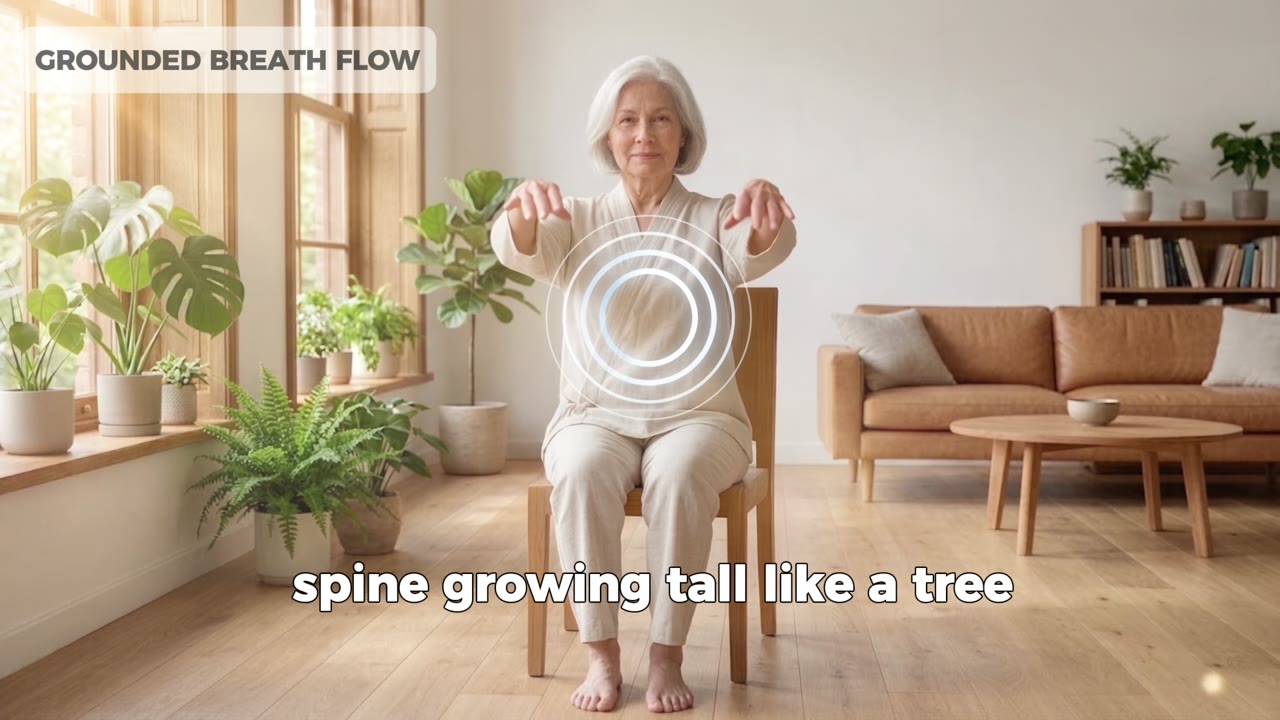
If standing tai chi feels too challenging right now, chair tai chi exercises build the same balance foundations from a safe, seated position. These exercises strengthen the muscles and sharpen the sensory systems you need for better balance — and many physical therapists use them as a bridge to standing practice.
You will need a sturdy, armless chair. Sit toward the front of the seat with both feet flat on the floor, hip-width apart.
1. Cloud Hands with Weight Shift
Extend both arms in front of you at chest height. Slowly sweep your right hand to the right while shifting your weight onto your right hip. Let your torso rotate naturally to follow the hand. Pause, then sweep the left hand to the left while shifting weight to the left hip. Continue alternating for 8–10 repetitions per side.
Why it helps: Trains lateral weight shifting and trunk rotation — the same movements that keep you balanced when you reach for something on a shelf or turn to look behind you.
2. Seated Weight Transfers
Place your hands on your thighs. Slowly shift your weight onto your right hip, lifting your left hip slightly off the chair. Hold for 2–3 seconds, then slowly return to center. Repeat on the other side. Perform 8 repetitions per side.
Why it helps: Strengthens the lateral hip stabilizers (gluteus medius) that are critical for single-leg balance during walking.
3. Heel Lifts with Arm Press
Press both feet into the floor and slowly lift your heels, rising onto the balls of your feet. At the same time, press both palms forward at chest height. Hold for 2–3 seconds, then slowly lower your heels and draw your hands back. Repeat 10–12 times.
Why it helps: Builds calf strength and ankle stability — two of the most important factors in preventing forward falls and trip recovery.
4. Waving Hands in Clouds (Seated)
Begin with both hands at waist level, palms facing down. Raise your right hand in a slow arc across your body and up to the left, as if waving through clouds. Follow the hand with your eyes and let your torso rotate. As the right hand descends, the left hand rises in a mirroring arc. Continue this flowing, circular pattern for 1–2 minutes.
Why it helps: Develops coordination, trunk mobility, and visual tracking — all of which contribute to better dynamic balance.
5. Seated Marching with Arm Swing
Lift your right knee toward your chest while swinging your left arm forward. Lower and repeat on the opposite side, creating a slow, controlled marching rhythm. Keep your spine tall and your breath steady. Continue for 1–2 minutes.
Why it helps: Mimics the cross-body coordination pattern of walking, building the hip flexor strength and rhythmic timing needed for confident, stable gait.
For a more detailed guide to chair-based exercises, see our complete chair tai chi exercises page or our guide to chair tai chi for seniors.
Recommended Videos
These free YouTube videos are excellent starting points for tai chi fall prevention practice:
- Taiflow — Module 01: Tai Chi 5 Minutes a Day (18M views) — The most-viewed tai chi video on YouTube. A gentle, modular routine you can build on over time.
- Seated Tai Chi for Seniors — David-Dorian Ross (333K views) — A clear, well-paced seated routine from a 7-time U.S. national tai chi champion. Great for those who prefer to start in a chair.
- Mayo Clinic Minute: Tai Chi — A short, credible overview from Mayo Clinic explaining why tai chi is recommended for balance and fall prevention.
- VA Gerofit — 30-Minute Tai Chi Session — A full-length tai chi session from the VA's Gerofit program, designed specifically for older veterans.
For more video recommendations, see our curated list of the best chair tai chi YouTube videos.
Getting Started Safely
If you are interested in tai chi for fall prevention, here are practical next steps:
- Talk to your doctor if you have any acute balance disorder, recent fracture, or uncontrolled cardiovascular condition.
- Start seated if you have concerns about standing balance. Chair-based tai chi builds the same foundational skills. See our seated tai chi guide.
- Look for a certified instructor trained in one of the three NCOA-recognized programs listed above.
- Practice consistently — most research programs met 2 times per week. Even 10–15 minutes of daily home practice makes a meaningful difference.
- Be patient — balance improvements in the research studies typically emerged over 12–24 weeks of regular practice. This is a long game, and it works.
Medical Disclaimer
This article is for informational purposes only and does not constitute medical advice. The research cited is intended to help readers make informed decisions and have productive conversations with their healthcare providers. If you have a history of falls, dizziness, or any medical condition affecting your balance, consult your physician or physical therapist before starting any new exercise program — including tai chi.
For more resources, explore our guides on chair tai chi exercises, chair tai chi for seniors, and seated tai chi.